MEETINGS

The Strings 2000 Conference will be held at the University of Michigan, Ann Arbor, on 10-15 July. The conference is part of the ongoing series of major annual string theory meetings and will focus on the latest topics in string theory and M theory. Further information is available at "http://feynman.physics.lsa.umich.edu/strings2000/".


The 2000 meeting of the Division of Particles and Fields (DPF2000) will be held on 9-12 August on the Columbus campus of Ohio State University. The meeting will cover the latest experimental results and new theoretical ideas that set the stage for physics in the new millennium. The deadline for the reduced registration fee is 8 July, and 1 June for abstract submission. The two primary sources of housing (Holiday Inn on the Lane and North Campus Dormitories) are within a short walk of all conference venues. Deadlines for guaranteed hotel and dormitory rates are 8 and 24 July respectively. For more details on the conference, including the programme, registration, submission of abstracts, and housing, visit "http://www.dpf2000.org".


The Cairo International Conference on High Energy Physics (CICHEP2001) will be held on 9-14 January 2001 and is organized by the Department of Physics, Faculty of Science, Ain Shams University, Cairo, Egypt. The purpose of the conference is to bring together scientists from universities and research institutes around the world to discuss current developments and new trends, results and perspectives. Topics include the status of the standard model; the phenomenology of the minimal supersymmetric standard model; experimental searches for supersymmetry; supersymmetry and supergravity theory; neutrino physics; string theory, dualities and M-theory; and the early universe and cosmology. Further information is available at "http://www.ectp.org".

COURSES

The University of Siegen, Germany, has introduced a new graduate course in physics. The course aims at a master degree after two years of physics studies and a PhD in natural science after an additional three years. A bachelor degree or equivalent is required. All lectures are given in English. Grants for excellent students are anticipated. The master thesis is expected to specialize in imaging techniques in medical physics, biophysics, material science or structural biology. More information is available at "http://besch2.physik.uni-siegen.de/~imaging/".

ON PEOPLE

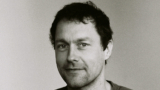
Jacques Marteau of Lyon's Institute for Nuclear Physics receives a Lyon young researcher award for his work on neutrino-nucleus interactions, which has led to new directions in the analysis of results from the detection of atmospheric neutrinos.

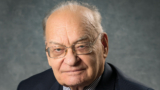
John Clive Ward 1924-2000

John Ward rose into world prominence with two succinct papers published in the Physical Reviewin 1950, both featuring his famous "Ward Identity": differentiating an electron propagator introduces an effective vertex interaction into that line. In the first paper, using his identity, Ward showed that soft photon-photon scattering will vanish and thus a separate four-photon renormalization constant is not required. In the sequel he proved that the electron wave-function renormalization constant had to equal that of the electron-photon vertex, a result that had previously been conjectured by Dyson. In the following year he thereby established the full renormalizability of quantum electrodynamics and avoided dealing with overlapping infinities by his clever use of the identity.

Such gauge identities and their generalization to finite photon momentum transfer today play a routine role in constraining the renormalization of gauge theories and in relating Green functions that differ by an extra vector gauge boson.

In the early 1960s with Salam, Ward laid the groundwork for today's "standard model" of elementary particles. Their 1964 paper in Physics Letterspoints out the SU(2)xU(1) gauge group, also found by Glashow, and describes the mixing of the neutral vector gauge bosons with the famous weak mixing angle, although the mechanism of spontaneous breaking is missing. They also made significant progress in elucidating non-leptonic weak interactions by realizing that the DI = 1/2 rule can be understood via the occurrence of a vacuum expectation value for the neutral K meson.

Ward published a number of papers on higher symmetries and grand unification, although they lacked the impact of his earlier work. For his significant contributions to quantum electrodynamics, he was elected Fellow of the Royal Society in 1965. He was awarded the Guthrie Medal of the UK Institute of Physics in 1980 and the Royal Society's Hughes Medal in 1983. He spent many years in the US (at Princeton, Carnegie Institute and Johns Hopkins) before emigrating to Australia in 1967, where he became Professor of Physics at Macquarie University. There he was instrumental in reshaping the structure of the undergraduate degree.
R Delbourgo, University of Tasmania.

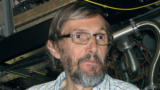
Giuliano Preparata 1942-2000

Italian theoretician Giuliano Preparata died in Frascati on 24 April after a relatively short battle against cancer. Born in Padua, he studied in Rome. After graduating in 1964 he joined Raoul Gatto's group in Florence. Later he was in the US at Princeton, Harvard and Rockefeller universities. In those years he produced excellent work on symmetries, current algebra and on the field theory approach to particle physics. After returning to Rome, he was soon called to CERN as a staff member. He was later Professor of Theoretical Physics at Bari and Milan.

Preparata was a theorist of great talent, with tremendous drive and a strong personality. His most recognized contribution to particle physics is the extension of the Wilson short-distance operator expansion to the whole of the light cone, developed in collaboration with Richard Brandt in around 1970. This remains a basic theoretical tool for the understanding of inclusive electron-positron annihilation and deep inelastic lepton scattering. However, his interests were already very wide and, in the same years, he produced a well known, seminal paper on nonlinear quantum optics with Rodolfo Bonifacio.

With time he progressively became critical of many steps in the construction of the Standard Model and of some parts of its foundations, such as QCD. His interests were then increasingly concentrated on different subjects, often with non-conventional approaches and opinions, such as nuclear physics, superconductivity, cold fusion and quantum gravity. He worked until the end with great energy. He was at CERN for the last time in January, when Remo Ruffini gave a presentation on their work on a possible mechanism for the production of gamma-ray bursts.

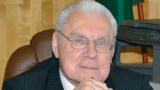
Lloyd Smith 1922-2000

Lloyd Smith, pioneer accelerator theorist and distinguished physicist, died on 1 May at his home in Berkeley, California. He was a major contributor to the design of most of the large US accelerators from the 1940s to the 1970s.

Born in Chicago in 1922, Smith completed his BA at Illinois, Urbana Champaign, in three years, and, after starting his PhD at Illinois, he moved with his advisor to Ohio State, where his thesis involved work with the Van de Graaff generator. At this time it was common practice to check accelerator operation by sighting on the beam. While working at the Illinois cyclotron, Smith suffered eye damage caused by neutrons from nuclear reactions of the beam with background gas. In 1949 he had the first successful surgery for neutron-induced cataracts, a procedure later used to help victims of the atomic bomb at Hiroshima.

Following his PhD, Smith spent a year at Chicago and joined the then Lawrence Radiation Laboratory to work on the design of the Bevatron. In 1950, during the anti-Communist years, when the state required loyalty oaths, Smith and his wife, a member of the Berkeley Campus faculty, left California. He went to the Carnegie Institute of Technology, where he helped to design a 450 MeV synchrocyclotron. He returned to the Rad Lab in 1952, where he remained until his retirement in 1994, except for leaves in 1955-56 at Brookhaven, 1959-60 at CERN, and 1968-70 at Fermilab - all crucial accelerator years for those laboratories.

Smith was a leading theorist in all accelerator projects taken on by the Berkeley Laboratory during the 1950s to the 1970s. He was a major figure in the design of the 88ð Cyclotron and the HILAC, the Positron Electron Project at SLAC, the Electron Ring Accelerator and the Experimental Superconducting Accelerator Ring. He was head of the theory group for the 200 BeV study, which preceded the Fermilab accelerator. He made major contributions to the theory of proton linacs and spiral-ridged cyclotrons, and he was an acknowledged expert on linear accelerators.

Smith also made fundamental contributions to the effort to develop nuclear fusion. In the late 1950s he worked on the theory of various "magnetic bottle" configurations to confine plasmas, including mirror machines. From 1976 he was the head of the Heavy Ion Fusion theory group at the Berkeley Lab, where he made fundamental contributions in the areas of intense beam transverse and longitudinal stability. At this time (1986) he also completed a study of the nonlinear effects of undulators on beam dynamics in storage rings, a most complete and rigorous work and a widely used reference in undulator and light source design.

Smith, a retiring, brilliant man with an incisive and witty sense of humour, made a broad and significant impact on accelerator theory.
Christine Celata.

Klaus Halbach 1924-2000

Klaus Halbach, a long-time staff physicist with the Lawrence Berkeley National Laboratory and an international expert in magnetic systems for particle accelerators, passed away on 11 May following a long battle with prostate cancer. He was 75.

A native of Germany who received his PhD in physics at Basel in Switzerland, Halbach came to the US in 1957 to work at Stanford with nuclear magnetic resonance pioneer Felix Bloch. Following a short return to Switzerland to start a plasma physics group, he joined the plasma physics group at Berkeley in 1960. His work with plasma physics led him into accelerator design and he was a major contributor to the Omnitron, a synchrotron that would have accelerated nuclei from hydrogen to uranium. Though never built, the Omnitron's design laid the groundwork for the Bevalac.

Halbach made his reputation with his work on magnetic systems for particle accelerators. He and Ron Holsinger, a Berkeley engineer and later Halbach's son-in-law, created the famous POISSON computer codes for magnetic system design, still in use after more than 30 years. Halbach went on to become one of the world's premier designers and developers of permanent magnets for use as insertion devices - wigglers and undulators - in synchrotron light sources and free electron lasers. He also designed magnets for the Berkeley Advanced Light Source storage ring.

In addition to his critical contributions to the Advanced Light Source, Halbach served as a consultant to many other projects around the world, including the Advanced Photon Source at Argonne and the Stanford Synchrotron Radiation Laboratory. All of the premier radiation sources within these machines depend on the permanent magnet technology now known as the Halbach Array. He was also a major contributor to the designs of high-resolution spectrometers at Jülich and LAMPF, Los Alamos.

Although he officially retired in 1991, Halbach continued to work on magnet design. He made contributions to such diverse projects as magnets for a miniature cyclotron that could be used for medical radioisotope production, magnets and low-friction magnetic bearings for an electromechanical battery, and the design of miniature permanent magnet NMR spectrometers for future Mars lander missions.

Halbach trained numerous students in his field and shared his knowledge with generous delight. His contributions and his enthusiasm will be sorely missed.
Lynn Yarris, Public Information Department, Lawrence Berkeley National Laboratory.